Research question and scope
This review asks what the supplied research records establish about Colosseum Casino’s reputation for Canadian players. The question is narrower than a legal verdict or a personal recommendation. It examines the retained notes on regulatory context, game fairness, withdrawals, and promotional terms, then separates reported information from conclusions that the evidence does not support.
The records are market-scoped to Canada and describe Colosseum as a digital gaming venue associated with the Casino Rewards network. They also describe a complex operating structure in which the operating entity may shift according to a player’s jurisdiction within Canada. These points are treated here as findings reported by the stored research, rather than as independently verified conclusions.
Method and evaluation criteria
The method was a focused review of five evidence areas that most directly affect a reputation assessment:
- Regulatory context: what the retained research reports about the framework under which the Canadian-facing service operates.
- Fair-play evidence: whether the records identify an external testing or assurance reference, without treating that reference as a guarantee.
- Product scope: what the stored notes describe about the game catalogue and live-dealer offering.
- Financial friction: whether the evidence records a specific withdrawal condition or a reported source of player complaints.
- Promotional terms: whether the welcome offer is described together with conditions that materially affect its interpretation.
This approach prioritises concrete, attributable statements over broad labels such as “safe,” “unsafe,” “good,” or “bad.” The records use attributed wording and include marketing descriptions, quality judgments, and a community-complaint observation. Accordingly, this article identifies the speaker—“the retained research” or “the stored note”—when a statement should not be presented as an independently established fact.
What the records report about Colosseum
Regulatory and corporate context
The stored licensing note reports that Colosseum Casino operates within a multi-jurisdictional regulatory framework and states that, for the majority of Canadian players, the site operates under the Kahnawake Gaming Commission. This is an observation in the retained research, not an independent legal determination by this article. The same note describes Fresh Horizons Ltd as registered in the British Virgin Islands under registration number 1906422 and states that its Canadian-facing services operate under a Kahnawake mandate.
The operator context is therefore not presented as a single, simple structure. Another retained note describes the arrangement behind Colosseum as complex but transparent within the Casino Rewards group, while also stating that the operating entity shifts according to the player’s exact jurisdiction in Canada. These records support describing the structure as jurisdiction-sensitive. They do not, on their own, establish a universal authorization position for every Canadian province or territory.
Fair-play references and technical history
The stored research reports that Colosseum’s random number generator integrity and fair play are independently verified by eCOGRA, identified in the note as a London-based testing laboratory. It also reports that the casino displays the eCOGRA Safe & Fair seal. This is the strongest fair-play reference in the selected evidence, but its status remains that of a reported external-assurance claim in the supplied dossier. The article does not convert it into a guarantee of every game outcome or every aspect of the player experience.
The technical note describes Colosseum as historically rooted in the Microgaming Viper downloadable software client and characterises its infrastructure as a bridge between legacy iGaming and modern mobile play. That description helps explain the platform’s technical background, but it is not itself a measure of reputation. A platform’s historical software lineage cannot establish whether a particular player will experience a smooth or difficult session.
Games and product identity
The game-selection record describes a specialised library of approximately 550 to 600 titles, reported as coming exclusively from Games Global and partnered independent studios including Triple Edge Studios and Stormcraft Studios. The note connects Games Global with the acquisition of Microgaming’s studio network. Because this is a stored description of the catalogue, the approximate count should not be read as a live inventory or as proof that every listed title remains available.
The same research reports that the platform historically relied on random-number-generator table games, including the Gold Series Blackjack and Roulette titles, and later integrated live-dealer games powered by Evolution Gaming for the Canadian market. This combination gives the retained research a clear product profile: a specialist portfolio with a Microgaming-related heritage and a live-dealer component. It does not establish that the selection is superior to that of other operators, nor does it establish how players generally rate the games.
Withdrawals and the reputation question
The financial-operations note identifies withdrawals as the most significant point of friction at Colosseum and describes them as the source of most community complaints. This is an attributed judgment from the stored research, not a statistical finding presented with a sample, methodology, or independently checked complaint dataset. It should therefore be read as evidence of a reported reputation issue, not as a measured statement about all players or all withdrawal experiences.
The same record states that the casino enforces a mandatory 48-hour pending period for every withdrawal request and attributes this condition to section 5.1 of the terms and conditions. This is a specific operational claim retained in the dossier. It is more precise than the broader complaint assessment, but the supplied records do not establish the complete time from request to receipt, the treatment of every payment route, or whether the condition has changed. The evidence supports identifying the pending period as a documented friction point in the stored research; it does not support assigning a broader performance rating.
Welcome promotion and interpretation of value
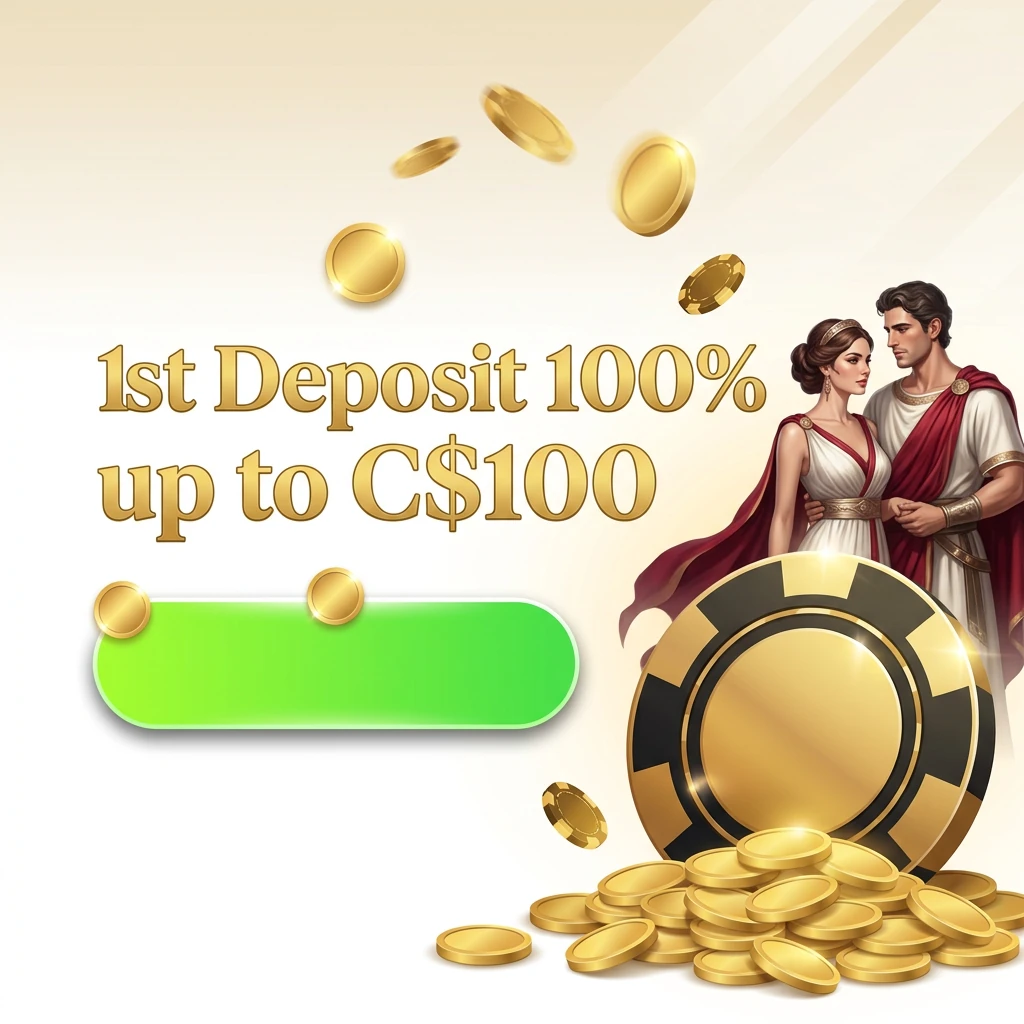
The bonuses note reports that the welcome package is advertised as up to $750 CAD across the first five deposits. It specifies that the first deposit offers a 100% match up to $100 and the second offers a 50% match up to $200. These figures are presented as advertised promotional terms in the retained research, not as a current offer independently checked for every Canadian player.
The same record describes the attached terms as “notoriously predatory” and says they require rigorous mathematical scrutiny. That wording is a warning and judgment belonging to the stored research. This article does not adopt it as its own verdict. The evidence does, however, make one interpretive point clear: a headline bonus amount cannot be evaluated separately from its conditions. The supplied records do not provide the complete wagering calculation, so they do not allow this article to reproduce a precise expected-value analysis or quantify the disadvantage alleged in the note.
How these findings relate to player reputation
The selected evidence presents a mixed and uneven reputation picture. On the positive side of the reported evidence, the research identifies a Kahnawake regulatory context for the majority of Canadian players, an eCOGRA fair-play reference, a defined specialist game portfolio, and an expansion into live-dealer content. Each of these is a reported feature or claim; none is a complete reputation score. The record describes Colosseum as a digital gaming venue within the Casino Rewards network.
On the negative side, the records give particular weight to withdrawals and promotional conditions. The mandatory 48-hour pending period is a concrete condition recorded in the research. The statement that withdrawals generate most community complaints is broader but less methodologically defined. The welcome package is described as having terms that the stored note judges harshly, while the dossier does not supply enough mathematical detail to independently test that judgement.
These points should not be merged into a single numerical rating. Regulatory context, fair-play testing, game selection, payment processing, and bonus value measure different things. A reported testing seal does not cancel out a reported withdrawal complaint, just as a pending period does not by itself establish that every withdrawal is mishandled. The evidence is better suited to a qualified profile than to an absolute “legit” or “not legit” conclusion.
Common misreadings of the evidence
A reported licence context is not a universal legal conclusion
The records report Kahnawake oversight for the majority of Canadian players and describe jurisdiction-dependent operating entities. That should not be expanded into a claim that the same arrangement applies identically across Canada or that the supplied research has settled every provincial question. The dossier does not establish a province-by-province authorization result.
A fair-play seal is not a guarantee
The eCOGRA reference is relevant evidence because it is identified as an external fair-play and RNG verification claim. It remains a reported assurance indicator. The dossier does not provide an audit report, testing date, test scope, or result set, so this article cannot evaluate those details or turn the seal into a guarantee of future outcomes.
A game count is not a promise of current availability
The approximately 550-to-600-title figure describes the stored research’s view of the specialised library. It should not be treated as a current, independently checked catalogue. Similarly, the mention of Evolution Gaming live-dealer content establishes that the research reports such an integration, not that every referenced game is continuously available to every player.
Community complaints are not a complete player survey
The withdrawal note reports that most community complaints concern withdrawals, but the dossier supplies no complaint sample, collection period, or comparative benchmark. The statement is therefore useful as a reputation signal recorded by the research, while remaining insufficient for a population-wide performance claim.
Limitations of the supplied research
This article is limited to the retained dossier. It does not independently verify the current website, the current terms, the current game lobby, the displayed seal, or the status of any operating entity. The evidence is also uneven: some records describe concrete conditions, while others use evaluative language or summarise community sentiment without showing the underlying material.
The records do not establish a complete province-by-province regulatory assessment, a complete withdrawal timeline beyond the reported 48-hour pending period, or a quantified analysis of the welcome offer’s wagering mathematics. They also do not provide a representative player survey. Those gaps prevent a definitive reputation ranking and make it inappropriate to treat the article as a personal-experience review.
Conclusion
The supplied evidence portrays Colosseum Casino as a specialised Canadian-facing digital gaming venue associated with the Casino Rewards network. The strongest documented elements in the retained notes are the reported Kahnawake context, the reported eCOGRA fair-play reference, and the defined Games Global and partnered-studio portfolio with reported live-dealer integration.
The same evidence records material qualifications. It describes a mandatory 48-hour withdrawal pending period, attributes substantial community criticism to withdrawals, and reports a welcome package whose conditions receive a strongly negative assessment in the stored research. Those observations should remain attributed and should not be converted into a universal verdict about every player’s experience.
On the evidence supplied, Colosseum’s player reputation is best described as a qualified research profile rather than a settled rating. The records establish several identifiable platform features and reported trust indicators, while leaving important questions unresolved and preserving a clear distinction between documented conditions, attributed claims, and conclusions the dossier does not establish.
Mini-FAQ
What method was used for this Colosseum review?
The review selected evidence on regulatory context, fair-play references, game scope, withdrawals, and promotional terms. It compared the strength and wording of those records instead of assigning an unsupported overall score.
What does the supplied research report about Canadian regulatory context?
The retained licensing note reports that the majority of Canadian players use a service operating under the Kahnawake Gaming Commission and describes the operating structure as jurisdiction-sensitive. The dossier does not establish a province-by-province legal conclusion.
How should the withdrawal complaints be interpreted?
The stored research reports that withdrawals are the main point of friction and the source of most community complaints, and it records a mandatory 48-hour pending period. The complaint statement is attributed research, not a representative player survey or a universal performance finding.
Does the evidence prove that Colosseum’s games are fair?
No. The dossier reports eCOGRA verification of RNG integrity and fair play and reports the display of an eCOGRA Safe & Fair seal. It does not supply the underlying audit details, so the article presents this as a reported assurance indicator rather than a guarantee.
Leave a Reply